
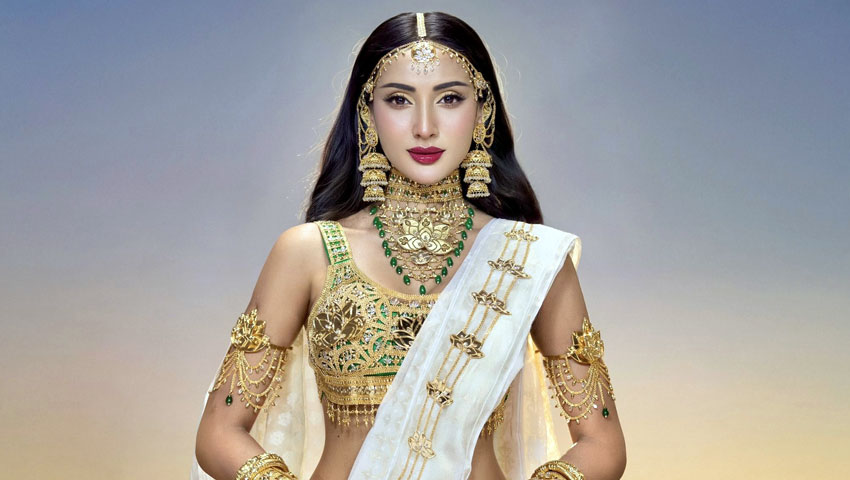

Tanzia Zaman Methila, the model and actress representing Bangladesh at the Miss Universe pageant, has chosen a Jamdani saree to showcase the country’s rich heritage and culture on the global stage. This traditional attire reflects the royal elegance and timeless artistry of Bangladesh.
On Wednesday (19 November), Methila expressed her feelings in a Facebook post, writing that her national costume for the Miss Universe platform is “a regal Jamdani saree that carries the living legacy of Bangladesh’s tradition and culture.”
Jamdani has been regarded as an exquisite fabric since the Mughal era, treasured by the aristocracy of Bengal. It stands as a powerful symbol of Bangladesh’s royal heritage and centuries-old cultural pride. Methila noted that “every thread of a Jamdani saree carries artistry, devotion, and enduring grace.”
The Jamdani tradition flourishes along the banks of the Shitalakshya River in Narsingdi and Narayanganj. These sarees are meticulously handwoven using the finest cotton fibers. Creating such a masterpiece can take over 120 days, highlighting the extraordinary craftsmanship and patience behind it.
Methila’s saree features intricate golden zari motifs along with designs inspired by the national flower, the water lily (Shapla). The Shapla motif appears not only on the saree but also in her jewelry. The saree was designed by Afrina Sadia Syeda, who incorporated the Shapla to represent Bangladesh’s natural beauty and national pride.
The jewelry crafted to complement the theme was designed by Laura Khan of 6 Yards Story. Together, the saree and ornaments beautifully portray Bangladesh’s cultural elegance and artistic strength.
Jamdani’s historical and cultural importance was recognized globally when UNESCO declared it an Intangible Cultural Heritage of Humanity in 2013. This recognition helped share the timeless beauty and craftsmanship of Jamdani with the world.
Methila’s choice not only highlights Bangladesh’s heritage on an international platform but also honors the nation’s traditional crafts and cultural identity.